Salt in Bread: Why It Should Never Be Missing!
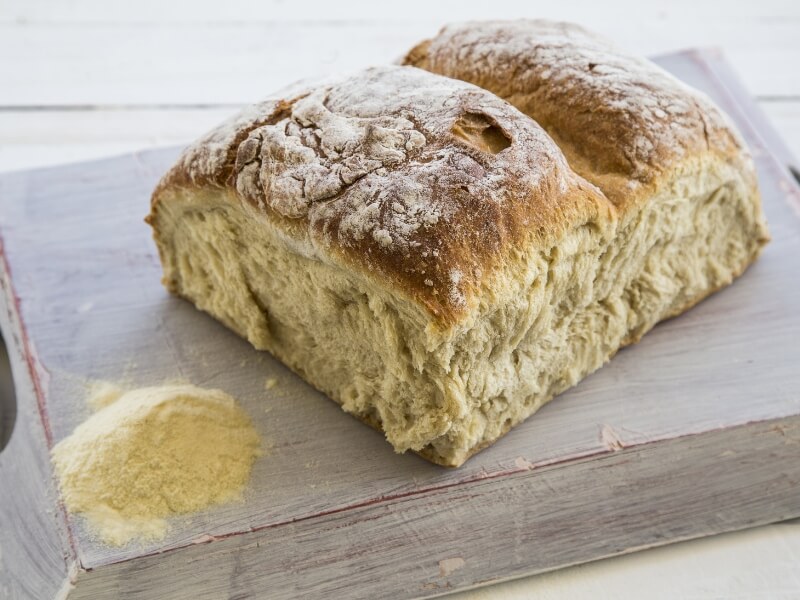
Salt – The White Gold
Salt, also known as white gold, is used in many dishes as a flavor carrier and seasoning. Additionally, especially in bread production, it plays an important role in the dough’s structure and aromas.
- Essential Ingredient and Flavor Enhancer
Salt in bread not only adds flavor but also contributes to the consistency of the final product. If bread dough is prepared without salt, it is not only bland and mild but also sticky and wet. It lacks the necessary aroma and cannot withstand extensive handling. On the other hand, if too much salt is used, the dough will not rise properly during baking, and the bread will remain low in volume and dense. This is due to the stabilizing effect of salt on protein.
Protein interacts with salt, resulting in a firmer structure—therefore, salt should not be omitted even in dough for sweet baked goods. The correct amount of salt during baking is not something that can be left to chance.
- It All Depends on the Right Amount of Salt
However, there are breads that use no salt at all. In Greece, traditionally, all breads are baked with salt, except for breads intended for diabetics or patients. In contrast, in Tuscany, for example, bread is primarily baked without salt. This practice dates back to the so-called Salt War of 1531, during which salt had become practically inaccessible.
- Salt in Modern Diets
Studies have shown that using smaller amounts of salt is required for healthier results. As a result, more and more recipes are being developed that call for lower salt content. In this context, and due to the evolving needs and preferences of consumers over the years, the baking industry has paid closer attention to the salt content in bread.
For example, the general salt content in bread worldwide ranges from 1.5% to 2% relative to the flour. It has been shown that this level has decreased since 2011 without affecting the taste.
However, salt in bread remains essential for its flavor. When salt is significantly reduced, it impacts the taste and is generally less preferred by consumers.
The role of salt in bread goes beyond flavor; it also affects structure, aroma, and shelf life. Salt increases shelf life by absorbing moisture. Adding the right amount of salt not only makes the dough more resilient and tolerant during fermentation but also helps achieve the desired acidity.
- Different Types of Salt
When we talk about salt, it’s important to note the distinction between sea salt, rock salt, and vacuum salt. Salt is typically obtained through the evaporated salt process. It is extracted from rock salt layers at three different locations, approximately 400 meters deep, with the addition of water, and then transported to a salt processing plant to begin the crystallization process.
Sea salt, on the other hand, is harvested from natural lagoons or artificially created basins through evaporation, while rock salt is mined from rock layers. This process usually occurs underground, although in salt deserts, rock salt is also mined above ground. Geologically, rock salt is also sea salt, but several hundred million years “older.” It is a rock formed by the evaporation of seawater. Salt mining is mainly carried out underground in large mines or through the brine process. Water dissolves about 26% salt, which is then pumped and converted into salt through evaporation or marketed as brine.
More than 250 million tons of salt are extracted worldwide each year, with China, the United States, and Germany leading in production. The type of salt used for baking depends on the respective bakery. Beyond the types mentioned, modern bakers also have the option of various specialty and flavored salts. All of them give bread its unique taste!
Otmar Fricker – Master Baker
Technical Baking Consultant, Loulis Mills / Kenfood