Health and dry bread – or simply, rusks.
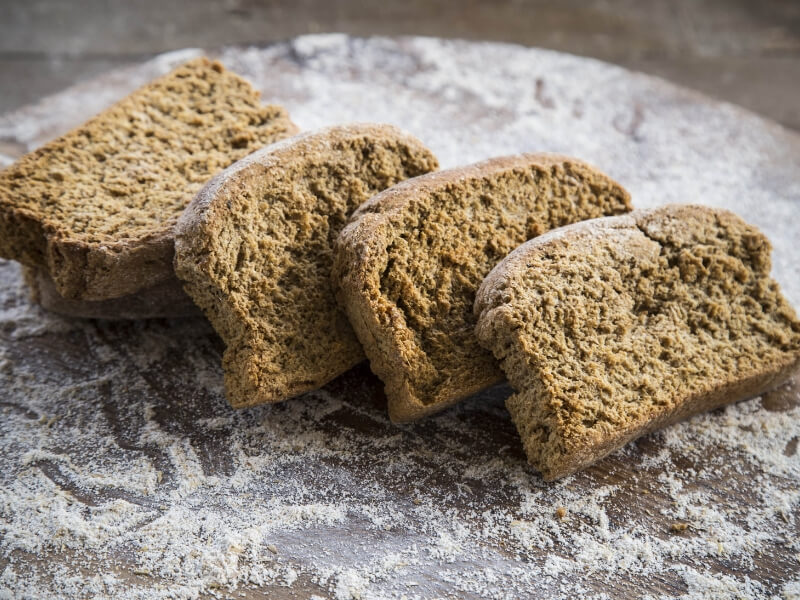
The benefits of wholegrain bread are now widely recognized. Wholegrain flour is rich in fiber, vitamins, and minerals, and a large part of the global population seems to prefer it over other types of bread.
In Crete, this has always been the case. Since ancient times, the traditional Cretan “bread” was what we know today as rusk or Kri-tharokouloura, made mostly from barley and wheat wholegrain flour, olive oil, and sourdough.
Barley flour is nutritionally balanced, helps reduce cholesterol and blood sugar levels, and supports healthy digestive function, while wheat flour is essential for the production and processing of the dough.
In the past, the production of these traditional Cretan rusks was a family tradition on the island, carried out immediately after the harvest and milling period.
One of their main advantages is their long shelf life. This is due to their dry nature, a result of both the preparation and storage methods, which prevent the growth of microorganisms favored by moisture.
Today, the rusk category has grown alongside its audience. Wheat, barley, rye, wholegrain, carob, Kythera-style, Sfakian, Migadi are just some of the popular types of rusks.
Two particularly interesting types of rusks differ not only in preparation but also in how they are served:
- Eptazymi
This rusk gets its name from being kneaded seven times and from the word “autozymo,” referring to the natural yeast derived from chickpeas and its effect on the dough. Eptazymi rusks may also contain sugar, anise, coriander, mastiha, cinnamon, or other aromatic herbs, and can serve as a complete savory snack on their own.
- Carob Rusks
Made from carob flour, a pleasantly sweet and healthy ingredient, carob rusks are excellent for digestive and gastrointestinal health, support cardiovascular function, and strengthen the musculoskeletal system. Their relatively low caloric content makes them ideal for those managing their weight.
The health benefits of rusks are not limited to a single type. In general, they contribute to nervous system health (B vitamin complex), provide energy (starch), and support proper digestive and gastrointestinal function (fiber).
As a result, rusks are finding a place on more tables and taking up an increasingly larger space on the shelves of both large and small bakeries.
For 7 generations, Loulis Mills has consistently supported industry professionals, focusing on continuous education, development, and up-to-date information. Subscribe to our newsletter to be the first to receive useful articles, industry news, and information about recipes and products that interest you.